

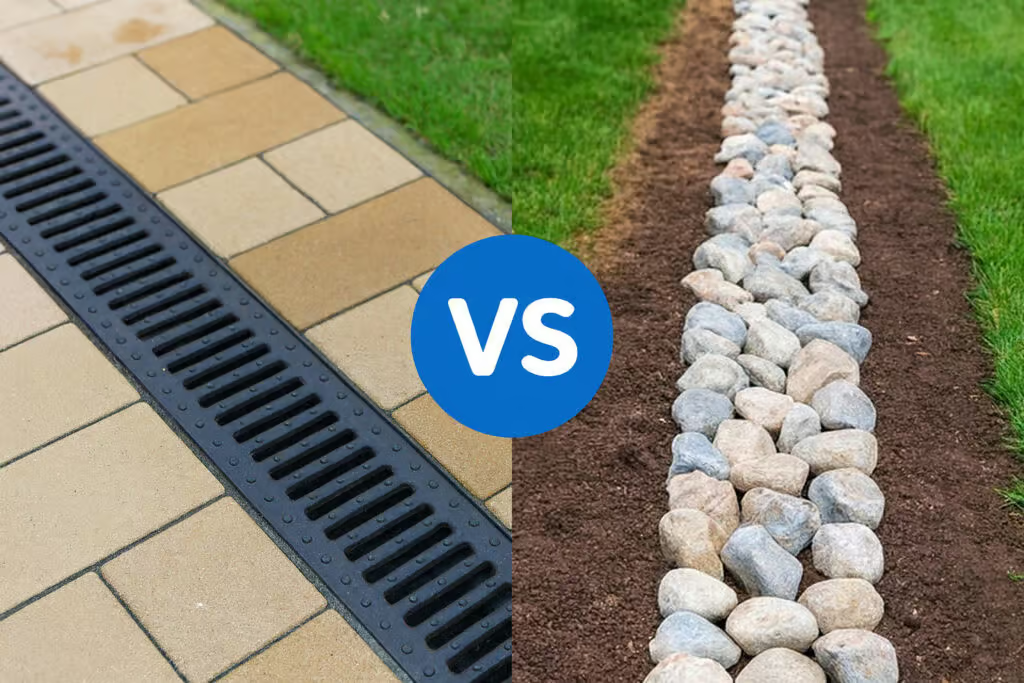
Every homeowner who has watched an afternoon storm turn their lush lawn into a temporary lake knows the specific sinking feeling that follows. Water pooling around the patio, squishy turf that refuses to dry out for days, and muddy patches where grass used to thrive are not just cosmetic annoyances. Left unaddressed, poor yard drainage threatens landscape grading, suffocates plant root systems, and routinely drives moisture against home foundations and crawl spaces.
When water problems escalate, the search for a permanent fix almost always leads to two contenders: surface drains and French drains. While the terms are sometimes used interchangeably in casual conversation, these systems are engineered to solve fundamentally different hydrological challenges. Installing the wrong one can mean spending thousands of dollars only to watch the same puddle form during the very next cloudburst.
Choosing the right system comes down to diagnosing where the water is coming from, how quickly it accumulates, and whether the problem lies above or below the soil line.
Understanding Surface Drains: Fast Evacuation for Standing Water
Surface drains operate on a straightforward premise: intercept standing water at grade level and whisk it away before it can saturate the soil or rise high enough to enter a home or garage.
Anatomy and Components
A standard surface drainage setup consists of three primary components:
-
The intake point: Typically a catch basin covered by a decorative or heavy-duty grate, or an elongated trench drain (often called a channel drain) set flush with a hardscape surface.
-
The conveyance line: Smooth, solid polyvinyl chloride (PVC) or high-density corrugated pipe buried underground at a downward pitch.
-
The discharge point: A designated safe exit, such as a pop-up emitter in a lower section of the yard, a curbside outlet where municipal codes permit, or a dry well.
How Surface Drains Work
Water travels across an impermeable or compacted surface, drops directly into the intake grate, and falls to the bottom of the catch basin. The basin often includes an internal sump area below the pipe outlet that traps leaves, pebbles, and heavy sediment. Clean water then flows swiftly through the smooth, solid pipe by gravitational pull toward the discharge area.
Because the pipe is solid rather than perforated, it does not absorb or release water along its run. It functions strictly as a sealed highway, carrying high volumes of stormwater away from danger zones without saturating the surrounding yard.
Best Applications for Surface Drains
Surface drains excel in situations involving rapid accumulation and surface sheet flow. They are the ideal choice for:
-
Patios, pool decks, and courtyards: Preventing standing water from accumulating against door thresholds.
-
Driveways and garages: Channel drains installed across the entrance of a downward-sloping driveway stop storm runoff from flooding into a garage.
-
Low points in compacted lawns: Swales and natural depressions where surface runoff collects rapidly after heavy downpours.
-
Roof downspout capture: Directing concentrated gutter runoff away from foundation walls through sealed, solid underground pipes.
The primary limitation of a surface drain is that it only catches what reaches the grate. If your yard resembles a soggy sponge because groundwater is rising from beneath, a surface drain will sit dry while the grass around it drowns.
Anatomy of a French Drain: Relieving Ground Saturation and Subsurface Pressure
Where surface drains target moving surface water, French drains address the hidden moisture traveling through the soil profile itself. Despite the European flair in its name, the system was developed in the mid-nineteenth century by Henry Flagg French, an American lawyer and agriculturalist from Concord, Massachusetts, who popularized using gravel trenches for field drainage.
Anatomy and Components
A modern French drain relies on a meticulously assembled layered system:
-
A sloped trench: Dug into the subsoil, graded to carry water by gravity away from high-moisture zones.
-
Geotextile fabric: A heavy-duty, non-woven filter fabric that lines the entire trench, separating surrounding native dirt from the gravel bed while allowing water to pass through freely.
-
Drain rock: Clean, crushed aggregate (typically three-quarter-inch to one-and-a-half-inch washed rock) that creates substantial void space for water storage and movement.
-
Perforated pipe: Rigid PVC or heavy corrugated tubing drilled with small intake holes or slits, installed near the bottom of the gravel bed with the perforations facing downward.
-
Permeable top layer: Either exposed decorative stone or a layer of gravel wrapped in fabric and capped with a thin layer of sandy loam and turf.
How a French Drain Works
Water follows the path of least resistance. When soil becomes saturated, excess groundwater presses outward in all directions. As it reaches the French drain trench, it filters through the geotextile fabric and pours into the spacious voids between the clean gravel.
Once inside the trench, the water table naturally drops toward the bottom. As water rises to meet the holes on the underside of the pipe, it enters the pipe and flows rapidly downhill to the exit point.
Placing the perforations downward seems counterintuitive to many DIY builders, but it is critical. As the water level rises from the trench bottom, it enters the pipe immediately and flows away. If holes face upward, the entire trench must fill to the top of the pipe before any evacuation begins, keeping the surrounding ground saturated far longer.
Best Applications for French Drains
French drains are designed for subsurface water management and long-term saturation relief. They are best suited for:
-
Squishy, waterlogged yards: Lawns that stay swampy for three or four days after rain has passed, even on sunny days.
-
Wet basements and crawl spaces: Exterior footing drains intercept groundwater migrating toward subterranean walls, eliminating hydrostatic pressure before moisture can seep through concrete.
-
Retaining walls: Installing a French drain behind a retaining wall relieves structural pressure caused by expanding wet soil.
-
Soggy hill bases: Intercepting hillside seepage (often called a curtain drain) before it pools in flat, low-lying turf areas.
Head-to-Head Comparison: Matching the Drain to the Problem
Deciding between these two solutions requires evaluating how water behaves across your property, the labor required to build the system, and the maintenance you are willing to manage.
Problem Type: Surface Runoff vs. Deep Saturation
The diagnostic signs on your property will tell you which system you need. If you step outside during a cloudburst and see visible sheets of water streaming across the driveway, collecting around the patio, or forming an active pool in the lawn within twenty minutes, you have a surface runoff problem. That demands a surface drain with appropriate catch basins.
Conversely, if water rarely forms visible rivers across the surface, but your footsteps sink two inches into muddy turf forty-eight hours after the rain stops, you are dealing with a subsurface saturation problem. In this case, clay-heavy soils or a high seasonal water table are trapping water underground. A French drain is the only mechanism that will draw that trapped moisture down and out.
Evacuation Speed
Surface drains are built for velocity. A twelve-inch catch basin attached to a four-inch smooth PVC pipe can evacuate hundreds of gallons of water in minutes, preventing immediate flash-flooding of structures.
French drains operate on a slower, steady timeline. They are percolation systems. Water must filter down through the ground, migrate through soil particles, pass through filter fabric, and seep through rock before entering the evacuation pipe. A French drain may take twenty-four to thirty-six hours to completely clear moisture from a yard after a major storm event, but it works continuously below the surface.
Excavation and Installation Labor
Surface drain installation is generally less disruptive. Trenches only need to be wide enough to accommodate the solid pipe and deep enough to maintain a proper downward slope of one-quarter inch per foot of run. The amount of displaced soil is modest, and backfilling involves using the native dirt removed during excavation.
Installing a French drain is labor-intensive and demanding. The trench must typically measure twelve to eighteen inches wide and eighteen to twenty-four inches deep. Every cubic foot of dirt removed must usually be hauled off-site because it cannot go back into the trench; it must be replaced with tons of washed drain rock. A standard fifty-foot French drain installation can easily require three to four tons of gravel, requiring heavy machinery or grueling wheelbarrow work.
Long-Term Maintenance
No drainage system is truly maintenance-free, but they fail in very different ways:
-
Surface drain maintenance: Basins gather leaves, twigs, grass clippings, and roof grit. Maintenance involves lifting the grate every couple of months, clearing out the accumulated muck in the catch basin sump, and flushing the solid line with a garden hose. If clogs happen, running a standard plumbing snake through the pipe clears the obstruction easily.
-
French drain maintenance: Maintenance focuses on preventing sediment intrusion. If a builder skips the non-woven geotextile fabric, native silt will gradually wash into the gravel voids, cementing the rocks together and choking the pipe within three to five years. Once a French drain clogs with internal mud, the only realistic repair is digging it up and starting over. Properly installing fabric and adding surface cleanout access points allows the line to be hydro-jetted periodically, extending its lifespan to twenty years or more.
Common Property Scenarios: Which Drain Solves What?
Real-world yard problems rarely exist in a vacuum. Here is how both systems apply to the four most frequent residential drainage dilemmas.
Scenario 1: Water pooling against the foundation after roof overflow
When downspouts dump hundreds of gallons of roof runoff next to the house foundation, the priority is capturing that concentrated flow immediately at the downspout adapter.
-
The correct fix: A surface drain line. Route downspouts into solid PVC pipe running away from the foundation to a daylight discharge point at least ten to fifteen feet away. Do not dump downspout water into a perforated French drain trench near the foundation, as this deliberately saturates the very soil you want to keep dry.
Scenario 2: A persistent muddy lawn in a flat backyard
The grass never quite dries, moss is overtaking the turf, and walking across the lawn leaves water bubbling up around your boots.
-
The correct fix: A French drain grid. Installing a French drain along the perimeter or creating a herringbone pattern through the affected lawn draws down the water table, dries out the root zone, and restores healthy soil aeration.
Scenario 3: Pavement flooding along the driveway
Rain sheets off the street or an adjacent slope, running down the driveway and threatening to enter the garage or splash against siding.
-
The correct fix: A trench or channel drain. Setting a long, narrow grate flush with the concrete across the driveway captures moving sheets of water instantly, funneling the volume into solid underground pipe.
Scenario 4: Seepage bleeding out of an uphill slope
A home sits at the bottom of a hill, and water constantly weeps out of the base of the cut slope, keeping the rear yard permanently damp.
-
The correct fix: A curtain French drain. A deep gravel trench cut across the slope perpendicular to the downhill flow acts as a subterranean dam, intercepting groundwater as it travels downhill and diverting it around the home.
The Hybrid Approach: When Both Systems Work Together
On complex properties, relying solely on one method can lead to disappointment. In many landscapes, surface runoff and deep soil saturation occur simultaneously.
Consider a property with an uphill neighbor. During a thunderstorm, a torrent of surface water cascades across the property line, while the subsoil absorbs moisture that slowly bleeds into your yard for days afterward.
The most resilient landscape designs utilize a dual-pipe hybrid drainage system inside a single shared trench. In this design:
-
A deep trench is excavated, lined with geotextile fabric, and bedded with gravel.
-
A perforated French drain pipe is placed at the bottom to manage ground saturation.
-
More gravel is placed over the perforated line.
-
A second, completely solid PVC pipe is laid inside the upper portion of the trench to carry roof downspout water and surface catch basin runoff.
-
The trench is topped off, keeping the surface and subsurface systems completely isolated inside the ground.
By isolating the two systems inside the same trench, you gain the benefits of both while saving significant excavation costs. Crucially, never connect a downspout or surface catch basin directly into a perforated French drain pipe. Surface debris will quickly plug the gravel from the inside, and during heavy storms, roof runoff will surge through the perforations, flooding the surrounding lawn from below.
Evaluating Costs, Soil, and Longevity
Before breaking ground, consider the physical makeup of your property and your budget.
Soil Composition Matters
The permeability of your soil directly dictates how effectively a drainage project performs. Coarse, sandy soils drain rapidly, allowing French drains to draw water from several feet away. Heavy, dense clay soils hold water stubbornly and transfer moisture slowly. In heavy clay, a French drain trench must often be wider, backfilled with gravel closer to the surface, and spaced more tightly to pull moisture effectively from the surrounding yard.
DIY vs. Professional Installation
A small surface drain installation involving twenty feet of trench and a single catch basin is an accessible weekend DIY project requiring basic hand tools.
A comprehensive French drain, however, presents substantial physical challenges. Digging a trench two feet deep through compacted clay, roots, and rocks, followed by shoveling multiple tons of gravel and disposing of yards of heavy waste dirt, tests the limits of manual labor. If your project spans more than forty feet, requires trenching near buried utilities, or demands precise laser grading to maintain slope, hiring a dedicated drainage or excavation contractor is often the smarter investment.
Final Decision Framework
To choose the system that will permanently protect your yard, walk your property during the next significant rain event and run through this quick evaluation:
-
Watch the clock: Does the problem appear within twenty minutes of heavy downpour and disappear within an hour of the clouds clearing? If yes, install a surface drain.
-
Test the soil: Does the yard remain squishy, swampy, and waterlogged a day or two after the rain stops? If yes, install a French drain.
-
Identify the hard surfaces: Is water gathering on driveways, patios, or dumping from gutters? Route that water through a solid-pipe surface system.
-
Check the foundation: Is moisture seeping through basement masonry or ponding in a crawl space? Protect the perimeter with a subsurface footing French drain.
By identifying whether your struggle is with fast-moving surface water or persistent subsurface saturation, you can invest in the right system the first time, protecting your foundation, restoring your turf, and reclaiming a dry, functional yard.